
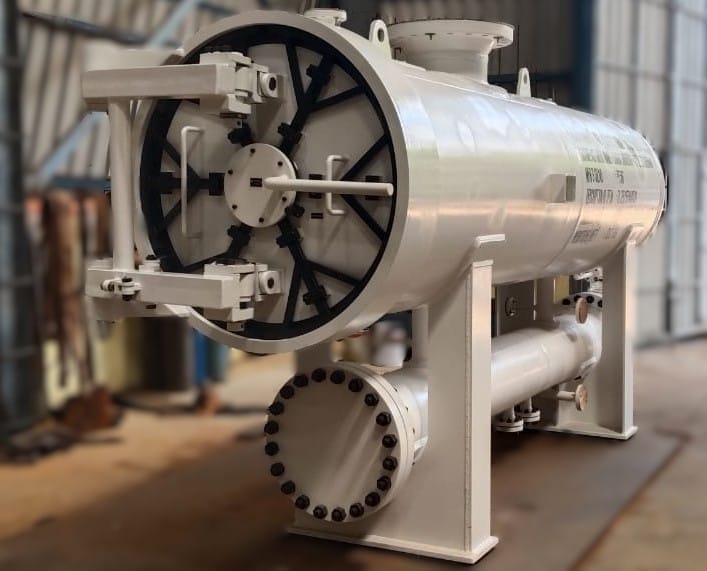
In industries where pipelines and pressure vessels operate under demanding conditions, access must be fast. Nevertheless, it should not be at the cost of safety. Whether it is for filter inspection, pigging operations, or routine maintenance, operators need a closure system that reduces downtime while maintaining structural integrity.
One of the most trusted solutions in such environments is the bandlock type quick opening closure.
If you are exploring closure systems for filtration skids, pig launchers, or pressure vessels, this guide explains what a bandlock type QOC is, how it works, where it is used, and why it remains a preferred choice in high-pressure applications.
Understanding Quick Opening Closures (QOCs)
A Quick Opening Closure (QOC) is a mechanical device installed at the end of a pressure vessel, pipeline barrel, filter housing, or pig launcher/receiver. It allows rapid access without the need to remove multiple bolts like traditional flanged connections.
Unlike bolted covers, QOCs:
- Reduce opening and closing time
- Improve operator safety
- Minimize downtime
- Simplify routine maintenance
Among various closure designs available in the market, the bandlock type quick opening closure stands out for its reliability and robust locking mechanism.
What Is a Bandlock Type Quick Opening Closure?
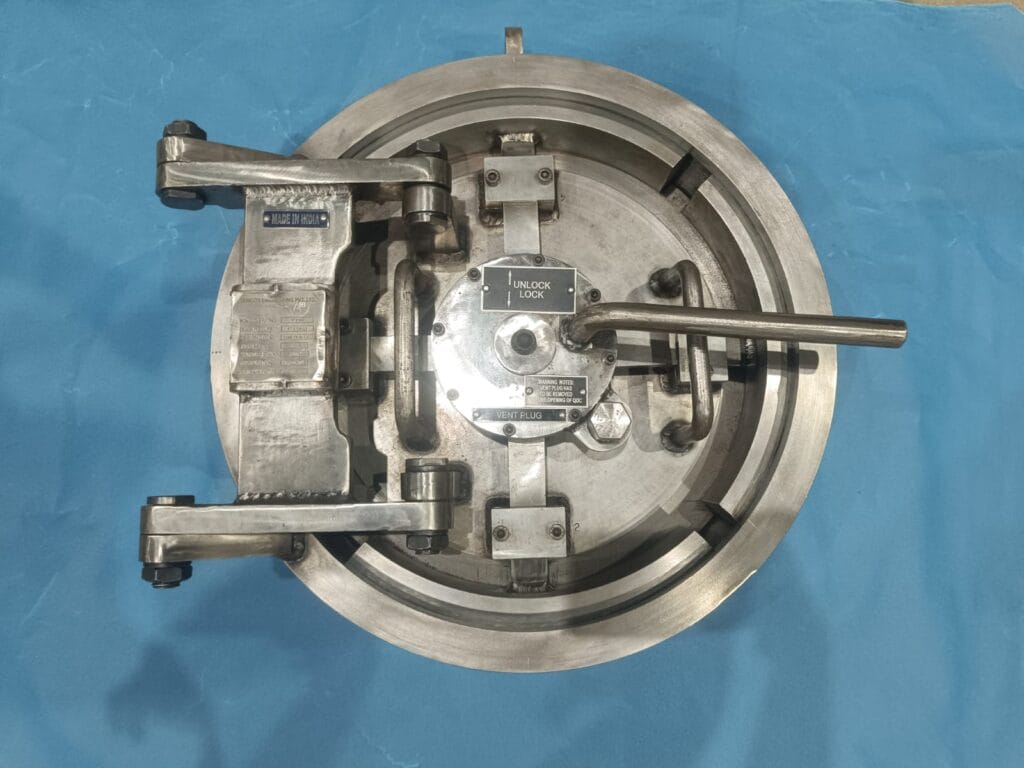
A bandlock type quick opening closure is a mechanical closure system that uses a segmented locking band or ring to secure the door to the vessel neck. Instead of relying on numerous bolts, the closure uses a locking band that engages into matching grooves between the door and the shell.
When properly engaged, the band evenly distributes internal pressure forces across the circumference, ensuring safe containment.
The design typically includes:
- A forged or fabricated door
- A vessel neck or hub
- A locking band (segmented ring)
- A hinge mechanism
- A safety interlock system
- Sealing gasket
The result is a closure that can be opened and closed quickly while handling high pressures safely.
How Does a Bandlock Type QOC Work?
The operation of a bandlock type QOC is straightforward but engineered for precision.
Step 1: Depressurization
Before opening, the vessel must be fully depressurized. Modern systems include mechanical or pressure-actuated safety interlocks to prevent accidental opening under pressure.
Step 2: Releasing the Locking Mechanism
The segmented locking band is disengaged using a mechanical actuator, handwheel, or hydraulic assist (depending on design).
Step 3: Swinging the Door Open
The hinged door swings open smoothly, allowing quick internal access.
Step 4: Closing and Locking
After maintenance or inspection, the door is repositioned, the band is re-engaged into its groove, and the system is secured.
Because the locking force is circumferential and evenly distributed, the closure maintains structural integrity even in high-pressure applications.
Key Features of a Bandlock Type Quick Opening Closure
A well-designed bandlock type quick opening closure includes several important features. We have listed a few here:
1. Segmented Locking Ring
The band expands and contracts to lock or release the door securely.
2. Hinged Door Assembly
Reduces manual handling and improves operator ergonomics.
3. Safety Interlock Mechanism
Prevents opening when internal pressure exists.
4. Self-Energizing Seal
Internal pressure enhances sealing performance rather than compromising it.
5. Compact Design
Requires less radial space compared to some other closure types.
These features make the bandlock type QOC particularly suitable for high-cycle industrial operations.
Where Are Bandlock Type QOCs Used?
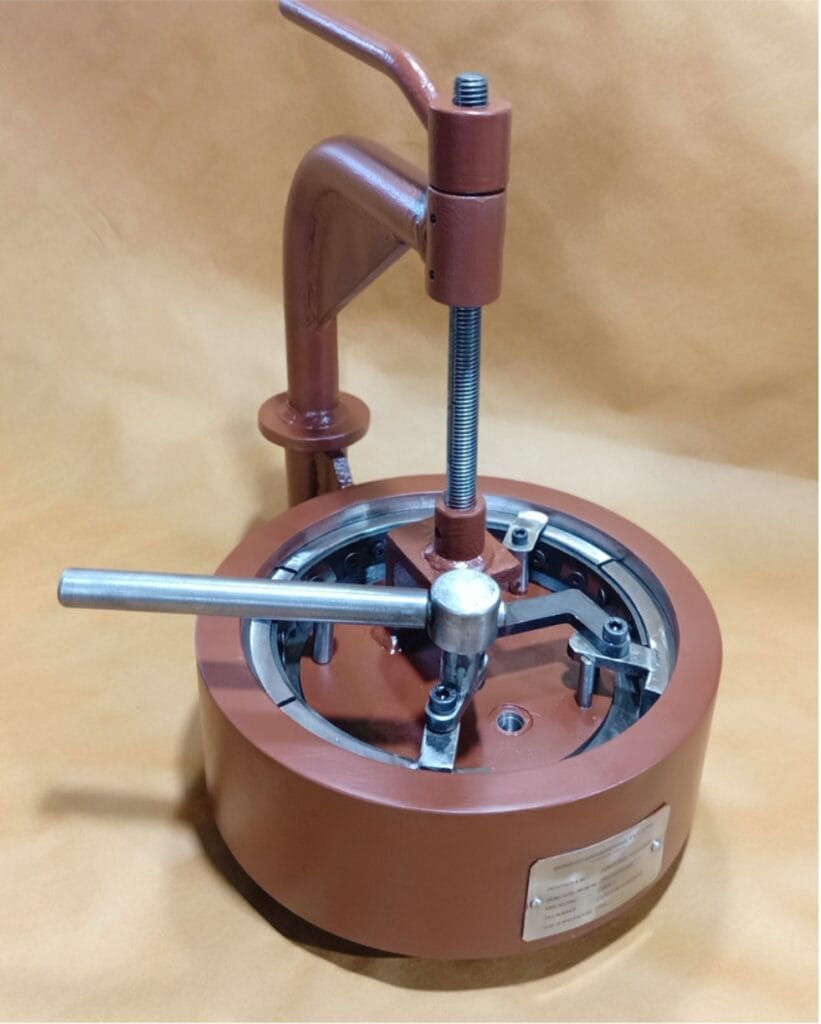
Bandlock closures are commonly found in industries such as:
- Natural gas processing
- Oil and gas pipelines
- Power plants
- Petrochemical facilities
- Filtration systems
- Pig launcher and receiver systems
They are especially popular in applications requiring frequent access, such as:
- Filter separator vessels
- Coalescing filter housings
- Basket filter strainers
- Pig traps
- Scraper launchers
In filtration packages and gas conditioning skids, quick access significantly reduces maintenance downtime.
Why Choose a Bandlock Type Quick Opening Closure?
There are several reasons why operators prefer this design.
- Faster Maintenance Cycles: Compared to bolted closures, opening time is dramatically reduced
- Enhanced Safety: Integrated safety interlocks minimize risk of accidental opening under pressure
- Uniform Load Distribution: The circumferential locking band distributes stress evenly, improving structural stability
- Reduced Operator Fatigue: Minimal manual effort is required compared to handling dozens of bolts
- Lower Downtime Costs: Faster turnaround directly impacts operational efficiency
For facilities where uptime is critical, this design offers measurable productivity gains.
While bolted closures are cost-effective in some low-frequency applications, high-performance systems often benefit from a bandlock type quick opening closure.
Engineering Considerations
When selecting a bandlock type QOC, several engineering factors must be evaluated:
- Design Pressure: Closures must be rated for the vessel’s maximum allowable working pressure (MAWP)
- Design Temperature: Material selection must account for operating temperature ranges
- Corrosion Resistance: Material compatibility with process fluid is essential
- Opening Orientation: Horizontal or vertical installation impacts hinge and support design
- Code Compliance: Closures should comply with ASME Section VIII and other relevant standards
Safety Aspects of Bandlock Type QOC
Safety is the defining characteristic of a properly designed bandlock closure. Key safety elements include:
- Mechanical pressure warning devices
- Visual pressure indicators
- Interlock systems that prevent unlocking under pressure
- Controlled venting before opening
These systems ensure that operators cannot accidentally disengage the closure while the vessel is pressurized.
In high-pressure filtration and gas processing applications, this layer of protection is critical.
Maintenance Requirements
Like any mechanical system, periodic maintenance ensures optimal performance. Typical maintenance tasks include:
- Inspecting the locking band for wear
- Checking gasket integrity
- Lubricating hinge components
- Verifying interlock functionality
- Inspecting sealing surfaces
Well-designed bandlock type quick opening closures are built for long service intervals and high cycle counts.
Customization Options
Modern manufacturers such as Sungov Engineering offer customized bandlock type QOC solutions based on:
- Vessel diameter
- Pressure rating
- Material specification (carbon steel, stainless steel, duplex, etc.)
- Actuation type (manual or hydraulic)
- Special coatings or linings
Customization ensures compatibility with specific operational requirements and environmental conditions.
Frequently Asked Questions
Q1. What is a bandlock type quick opening closure?
It is a pressure vessel closure that uses a segmented locking band to secure a hinged door, allowing fast and safe access without removing multiple bolts.
Q 2. How does a bandlock type QOC improve safety?
It includes interlock systems that prevent opening under pressure and distributes internal forces evenly around the circumference.
Q 3. Where is a bandlock type quick opening closure used?
It is commonly used in filter vessels, pig launchers, gas processing systems, and other pressure equipment requiring frequent access.
Q 4. Is a bandlock type QOC suitable for high pressure?
Yes, when properly designed and engineered to applicable codes, it can handle high-pressure applications safely.
Q 5. Why is it better than a bolted closure?
It reduces maintenance time, improves operator safety, and minimizes downtime in high-cycle operations.