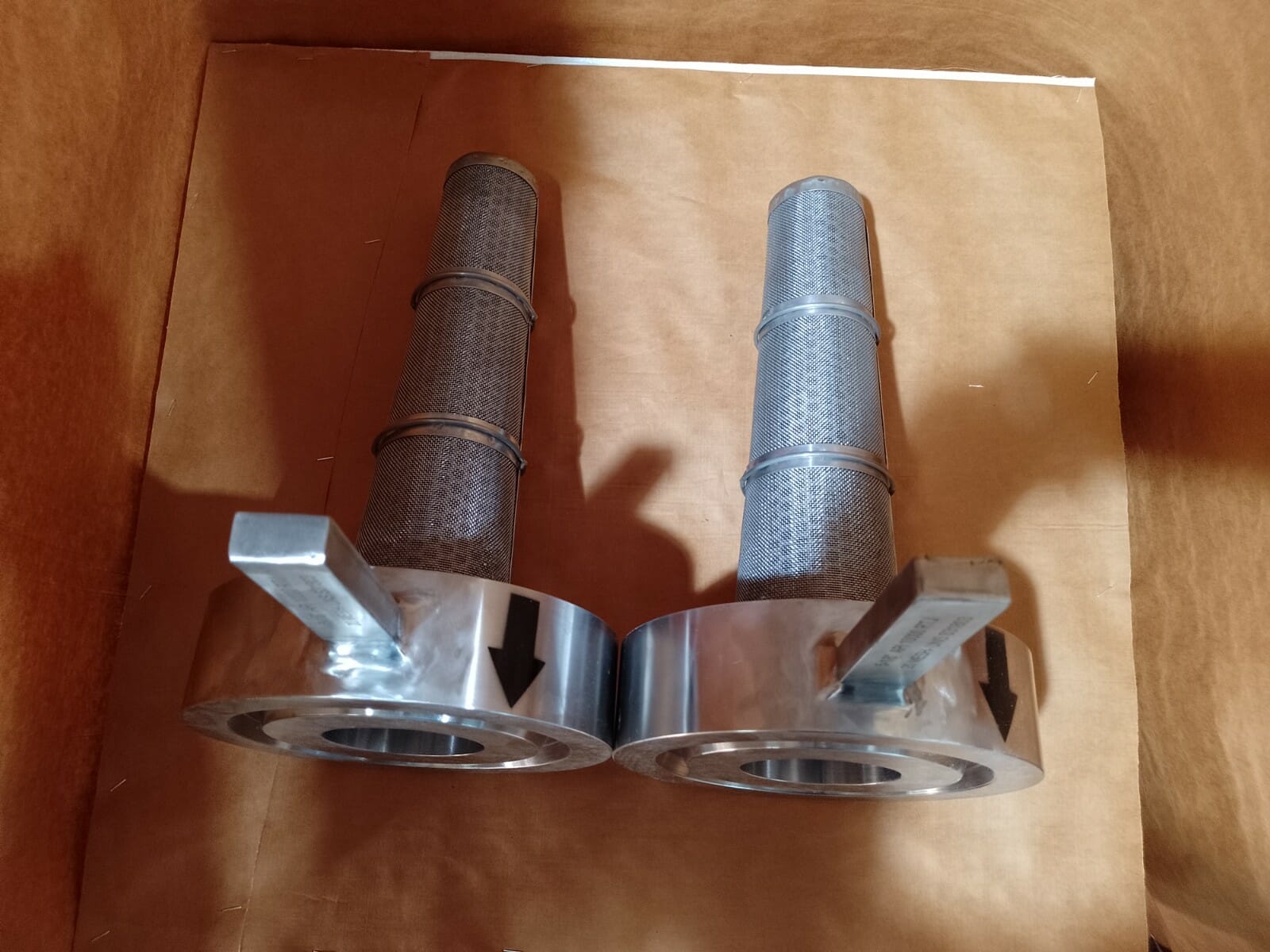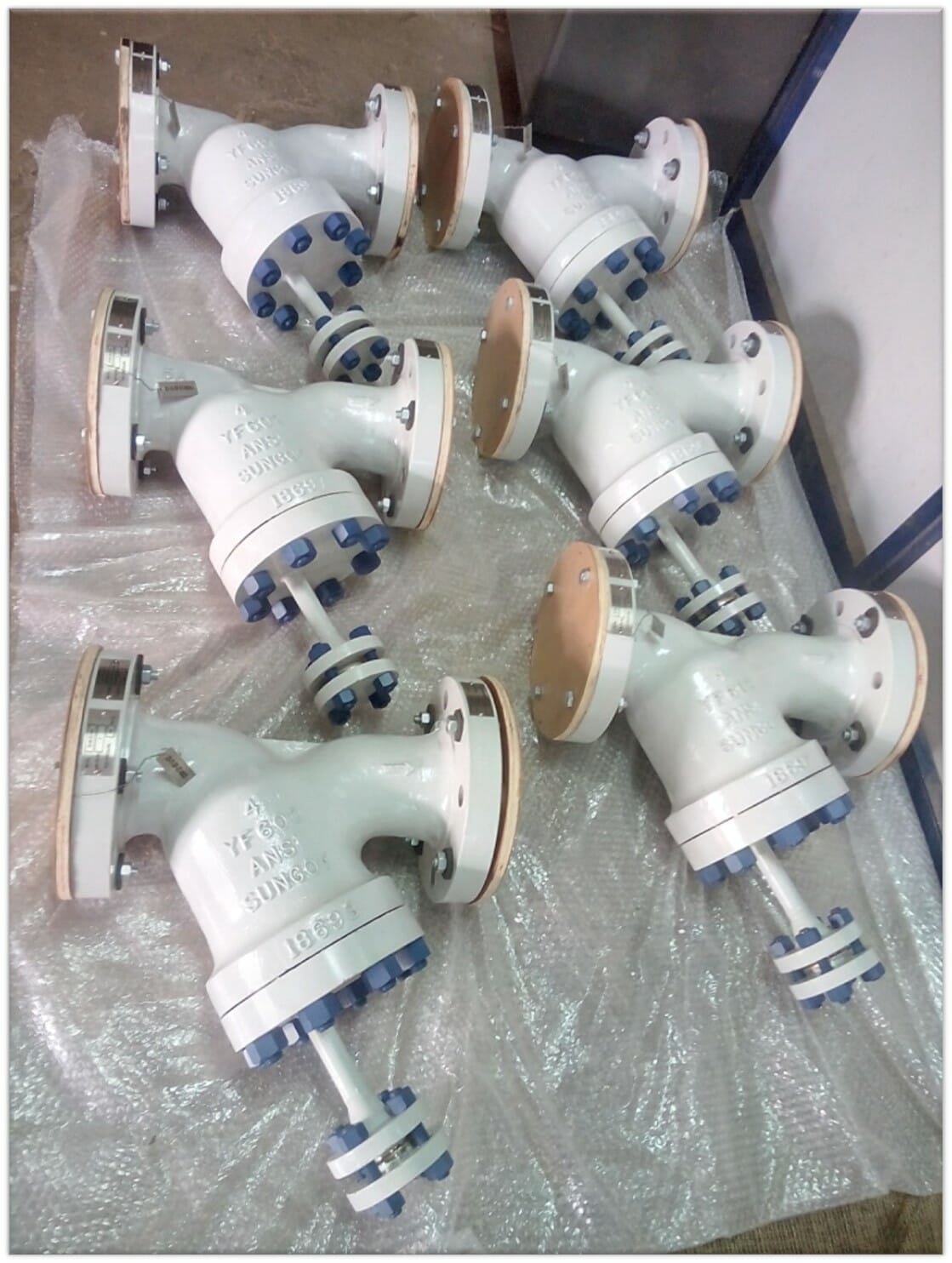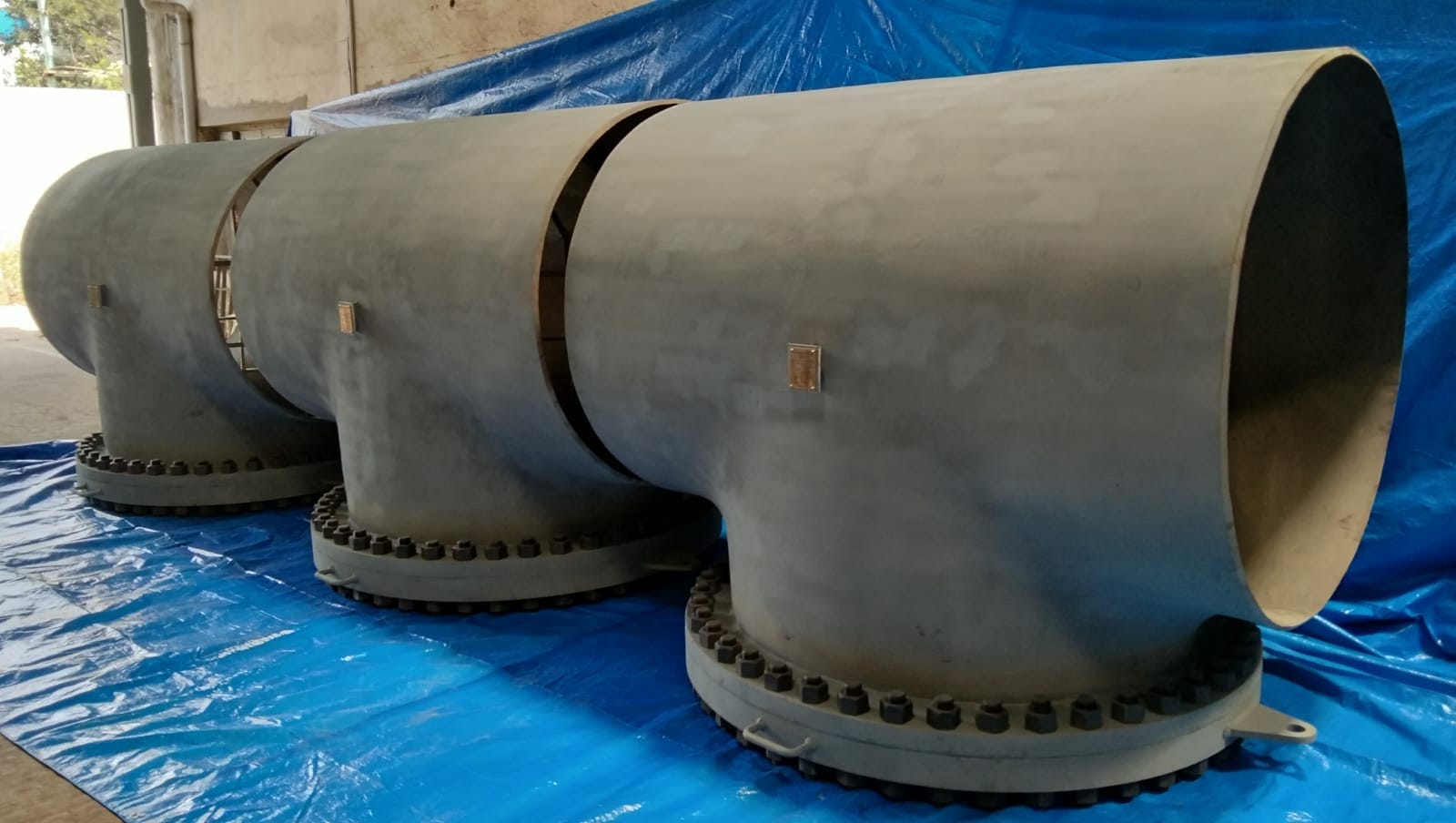


Strainers, consisting of Y (Wye), Basket (Bucket), T (Tee), Conical & Duplex types, are specialty pipeline products for protection of capital industrial equipment. They are primarily used on pump suction, upstream of heat exchanger, control valve and other critical equipment sensitive to pipeline rust, scale or other solid contaminants in liquid or gas flow.
Strainers are Sungov’s birth product i.e. Sungov Engineering was incorporated with the mission to develop and manufacture Y and Basket Strainer product range. A typical strainer assembly consists of a pressure retaining body & cover, a screen, a gasket or seal and/or bolting to fasten the cover to the body.
Sungov manufactures industrial strainers in all possible combinations and features. The standard range includes:
- Pipeline sizes from DN15 (1/2”) to DN1500 (60”)
- Cast, forged or welded construction
- Pressure ratings from ASME Class 75 to ASME Class 2500
- Flanged, threaded, butt-weld end connections
- Screen ratings from Mesh 200 wire mesh to 9mm hole perforated plate
- Diverse metallurgies: carbon steel (WCB, A105), low temperature carbon steel (LCC, A350), austenitic stainless steel (CF3, CF3M), austenitic-ferritic (duplex) stainless steel (4A, 6A), nickel alloys (CW6MC), copper alloys (C95800)
Note: Specification summary above is not exhaustive, other specifications including different materials of construction may be possible. Contact us today for your requirements.
Frequently Asked Questions – Industrial Strainers
Q 1. What are Y type strainers and how do they work in pipelines?
Y type strainers are mechanical filtration devices installed in pipelines to remove solid particles from liquids, steam, or gases. The Y-shaped body houses a perforated or mesh screen that traps debris while allowing clean fluid to pass through. They are widely used in horizontal or vertical piping systems to protect pumps, valves, flow meters, and other downstream equipment.
Q 2. Where are strainers used in pipeline systems?
Strainers in pipeline systems are installed upstream of critical equipment to prevent clogging, damage, and performance loss. They are commonly used in:
1. Oil & gas pipelines
2. Water and wastewater systems
3. Steam lines
4. Chemical processing plants
5. Firewater systems
Properly selected strainers improve equipment life, reduce maintenance frequency, and enhance system reliability.
Q 3. What is the difference between a Y strainer filter and a T type strainer?
A Y strainer filter is compact and ideal for moderate debris removal in steam, liquid, or gas pipelines. It is commonly used where space is limited.
A T type strainer (also called a basket-style body) offers higher dirt-holding capacity and is better suited for high-flow or heavy-contamination applications. It is often preferred in larger industrial process systems.
Q 4. What are conical strainers (cone strainers) and when are they used?
Conical strainers, also known as cone strainers, are temporary filtration devices typically installed during plant commissioning or startup. They are placed between flanges to capture construction debris, welding slag, or scale before permanent strainers are fully operational. They are commonly used in oil & gas, power, and chemical plants.
Q 5. What materials are commonly used for industrial strainers?
Industrial strainers are manufactured in various materials depending on operating conditions:
1. Stainless steel strainers – Ideal for corrosive fluids and high-temperature applications
2. Cast iron strainers – Suitable for water, HVAC, and low-pressure services
3. Carbon steel and alloy steels – Used for high-pressure industrial systems
Material selection depends on pressure rating, temperature, and fluid compatibility.