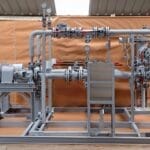

In any oil and gas facility, whether it’s an upstream gas field in Abu Dhabi or a downstream processing station in Gujarat, one thing that remains non-negotiable is the gas that moves through the system. It is mandatory for this gas to be clean, dry, and free from damaging contaminants. That’s where a natural gas filter separator becomes indispensable. These robust systems act as the first line of defense against liquids, aerosols, and particulate matter that threaten the health of compressors, turbines, metering systems, and downstream equipment.
Even though the purpose remains the same, the configuration you choose, i.e. vertical filter separator or horizontal filter separator, can drastically influence performance, maintenance ease, footprint, and long-term operating cost. And for industries in India and the UAE, where processing conditions vary widely, selecting the right design becomes a strategic decision.
In this blog, we will walk you through how these separators work, where each design excels, and how a filter separator skid from Sungov Engineering ensures reliable, long-term performance in demanding industrial environments.
Why Natural Gas Filter Separators Are Essential
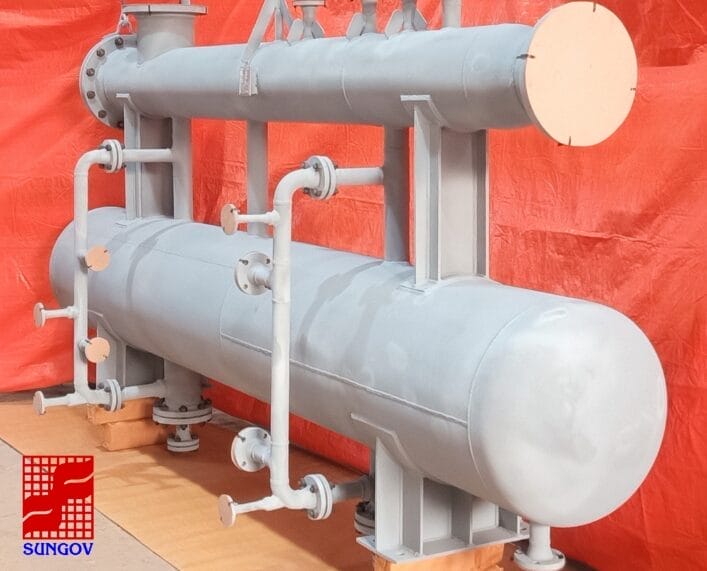
Natural gas streams seldom arrive in a clean, ready-to-use state. Dust, pipeline scale, compressor lube oil carryover, moisture droplets, and even unexpected slugs often make their way through gathering and transmission lines. A natural gas filter separator protects your processing equipment by performing the critical function of eliminating liquids and aerosols using mechanical separation internals.
When the mechanisms work in tandem, you get a gas stream that meets quality standards while avoiding pressure fluctuations, corrosion, inefficient combustion, and equipment damage.
Vertical Filter Separator: Compact, Efficient & Ideal for Variable Flow
A vertical filter separator is often the first choice for customers who face limited plot space or fluctuating flow conditions. Its tall, upright design offers several advantages that fit well with many Indian and UAE-based installations.
1. Excellent Liquid Knockout Performance
Vertical designs use gravity more effectively to allow droplets to fall out of the gas stream. This makes them ideal for applications where bulk liquid removal is as important as fine particulate filtration.
2. Minimal Footprint for Urban or Offshore Setups
In locations where space is at a premium—offshore platforms, refinery utility blocks, desert installations with limited space—vertical separators provide maximum filtration efficiency with minimum land usage.
3. Easier Drainage & Slug Handling
The elongated design allows more room for liquid accumulation at the bottom. Because most oil & gas operations in India and the UAE experience periodic slugs due to pressure fluctuations or pipeline sweeps, the vertical arrangement handles these surges without compromising performance.
4. Simple Maintenance Layout
Accessing filter elements and separator internals is relatively straightforward in vertical units. Technicians can remove cartridges from the top, reducing downtime during maintenance activities.
5. Better for Lower to Medium Gas Flow Rates
While vertical separators work across a wide range of capacities, their structural configuration benefits operations that don’t require extremely high flow volumes. For CNG stations, city gas distribution networks, and small process units, this becomes a key advantage.
Horizontal Filter Separator: Stable, High-Capacity & Easy to Inspect
If your operation demands high gas flow rates, large surge volumes, or convenient accessibility, a horizontal filter separator may be the superior option. These separators are widely used in natural gas gathering stations across Gujarat, Rajasthan, Abu Dhabi, Sharjah, and Oman.
1. Designed for High Throughput
Horizontal designs offer a longer residence time for gas, which ensures better solid-liquid separation at higher velocities. This makes them ideal for transmission pipelines, booster compressor stations, and high-pressure dehydration units.
2. Large Filtration Area
Because the separator lies horizontally, it allows installation of more filter cartridges in parallel. This means:
- Higher dirt-holding capacity
- Lower pressure drops
- Longer intervals between cartridge replacement
For remote desert installations in the UAE or large pipeline networks in India, this has a direct impact on operating costs.
3. Excellent for Aerosol and Fine Mist Removal
Horizontal separators support multi-stage internals more efficiently, ensuring high removal efficiency even when the contaminant load contains persistent aerosols or hydrocarbon mists.
4. Easy Access for Inspection Teams
Maintenance personnel appreciate the side-manway access typical in horizontal units. Inspecting welds, checking separator internals, and replacing cartridges becomes more comfortable and faster, reducing man-hours.
5. Ideal for Harsh Environments
From Rajasthan’s dusty fields to Abu Dhabi’s high-temperature gas facilities, horizontal separators withstand extreme climates while maintaining consistent performance.
Filter Separator Skid: A Complete, Ready-to-Operate Package
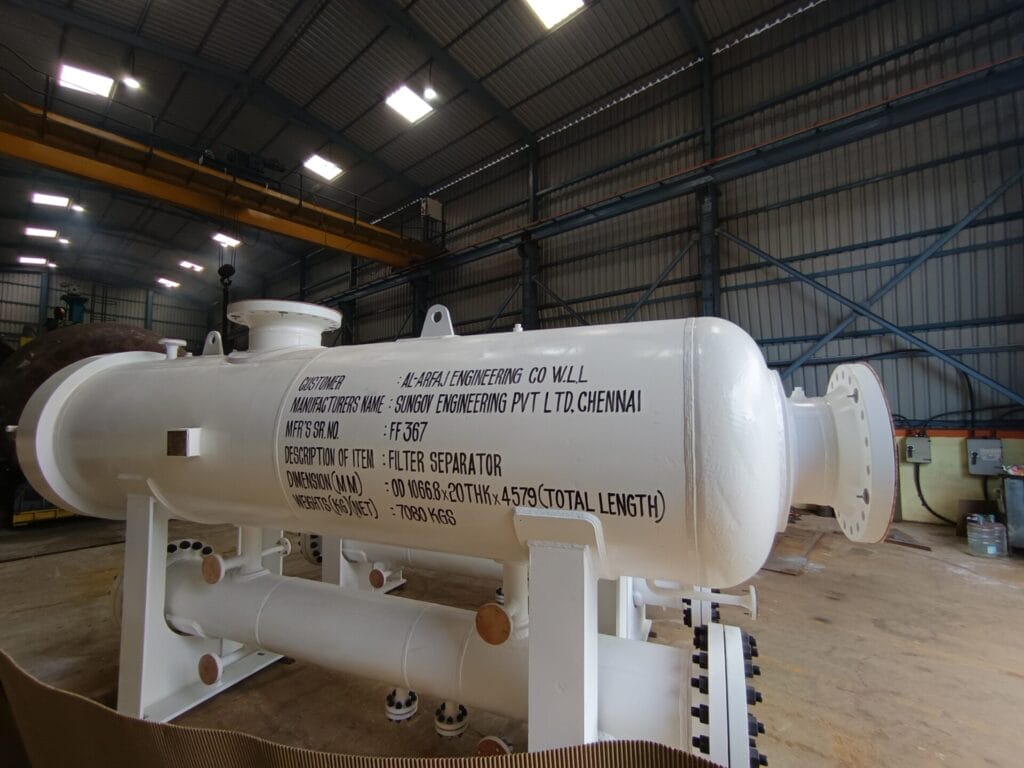
For customers who prefer plug-and-play convenience, Sungov Engineering offers the full solution in the form of a filter separator skid. Instead of sourcing vessels, valves, instrumentation, and support separately, you receive a unified skid-mounted system designed for smooth, trouble-free operation.
Why Skid-Mounted Systems Are Becoming Popular in India & UAE:
- Faster installation – reduced onsite welding and fabrication
- Improved safety – factory-tested components minimize startup issues
- Better quality control – as all equipment is engineered in a controlled environment
- Easy relocation – especially beneficial for temporary installations or rented drilling rigs
- Compact integration – ideal for constrained refinery or compressor station layouts
Where Sungov Engineering Comes In
For decades, Sungov Engineering has supplied natural gas filter separator systems that meet the demanding standards of the oil and gas industry. Whether a refinery in Chennai needs a compact vertical filter separator or a gas transmission operator in the UAE requires a high-capacity horizontal filter separator, every unit is engineered to deliver consistent, long-term performance.
What Customers Value Most About Sungov:
- Precision-engineered filtration internals
- ASME-compliant pressure vessels
- Customizable filter separator skid configurations
- High-efficiency cartridges tailored to application needs
- Proven reliability in Indian and Middle Eastern climates
The result? Clean, dry natural gas that keeps your pipelines, instruments, and equipment running smoothly day after day.