The role of natural gas in industries such as power generation, petrochemicals, and manufacturing is critical. However, before it can be used efficiently in turbines, compressors, or industrial burners, the gas must be properly cleaned. Even though natural gas appears clean, it often carries contaminants that can damage sensitive equipment.
This is where a natural gas filter cartridge becomes essential. Installed inside filtration systems, these cartridges remove impurities from the gas stream, ensuring safe and efficient operation of downstream equipment.
Along with dry gas filters, these cartridges form an important part of industrial gas filtration systems. Understanding how they work helps operators maintain system reliability and extend the lifespan of expensive equipment.
What Is a Natural Gas Filter Cartridge?
A natural gas filter cartridge is a replaceable filtration element used inside gas filtration vessels to remove contaminants from the gas stream. The cartridge acts as a barrier that traps unwanted particles while allowing clean gas to pass through.
These cartridges are typically made from high-efficiency filtration media such as:
- Cellulose
- Synthetic fibers
- Polyester
- Microglass
The filtration media is arranged in a cylindrical structure and supported by a metal core and outer casing. As gas flows through the cartridge, particles are captured within the media layers.
In many industrial filtration systems, multiple cartridges are installed within a vessel to handle large gas volumes.
Why Filtration Is Important in Natural Gas Systems
Although natural gas is considered a relatively clean fuel, it can still contain contaminants that enter during production, transportation, or pipeline corrosion.
Common contaminants found in gas streams include:
- Dust and sand particles
- Rust from pipelines
- Scale from process equipment
- Welding debris
- Solid corrosion products
If these contaminants are not removed, they can cause several problems such as the following:
- Equipment Damage: Particles can erode turbine blades, compressor components, and valves
- Reduced Efficiency: Accumulated debris can affect combustion systems and reduce performance
- Increased Maintenance Costs: Unfiltered gas leads to more frequent maintenance and equipment replacement.
How a Natural Gas Filter Cartridge Works
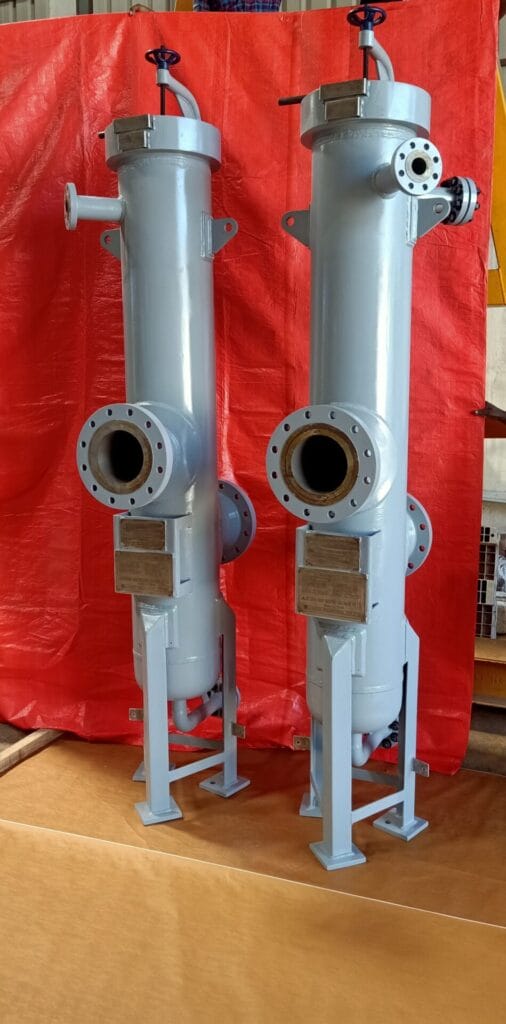
The basic working principle of a natural gas filter cartridge is mechanical filtration. Gas passes through the filter media while impurities are trapped within the cartridge. The filtration process typically occurs in several stages.
- Gas entry into the filtration vessel: The contaminated gas first enters the filter housing. Inside the vessel, the gas flow is directed toward the installed cartridges.
- Gas passes through the filter media: As the gas flows through the filtration media, particles are captured by the fibers within the cartridge.
After passing through the filtration layers, the clean gas moves through the cartridge core and exits the vessel.
Over time, trapped particles accumulate in the filter media, increasing pressure drop across the cartridge. When this pressure drop reaches a certain limit, it is time to replace the cartridge.
Role of Dry Gas Filters
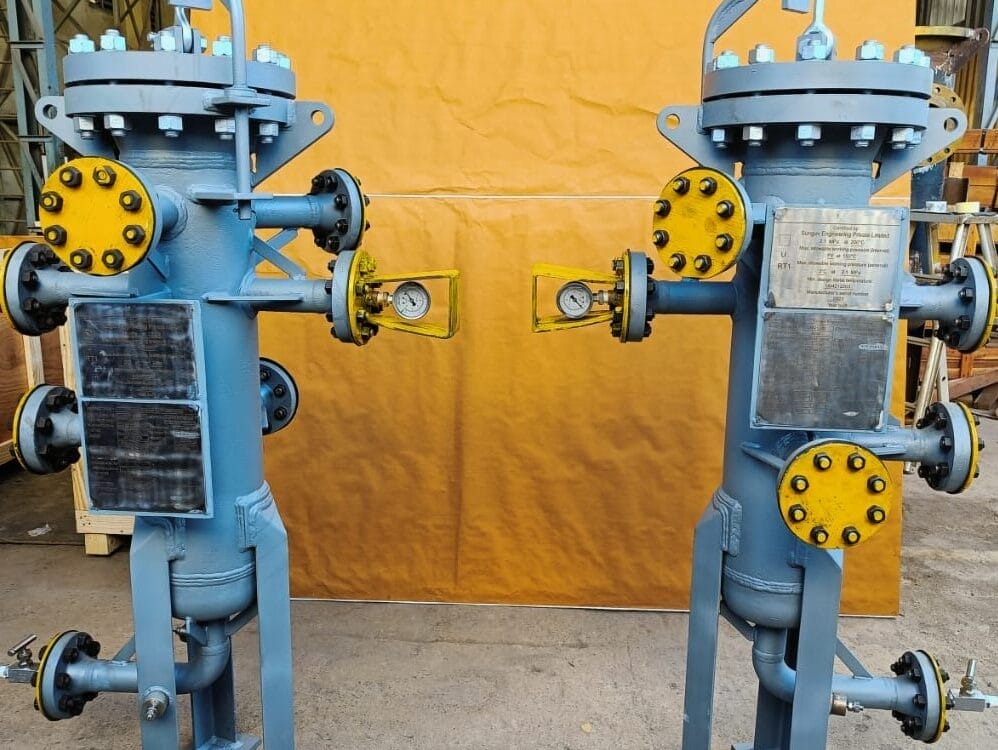
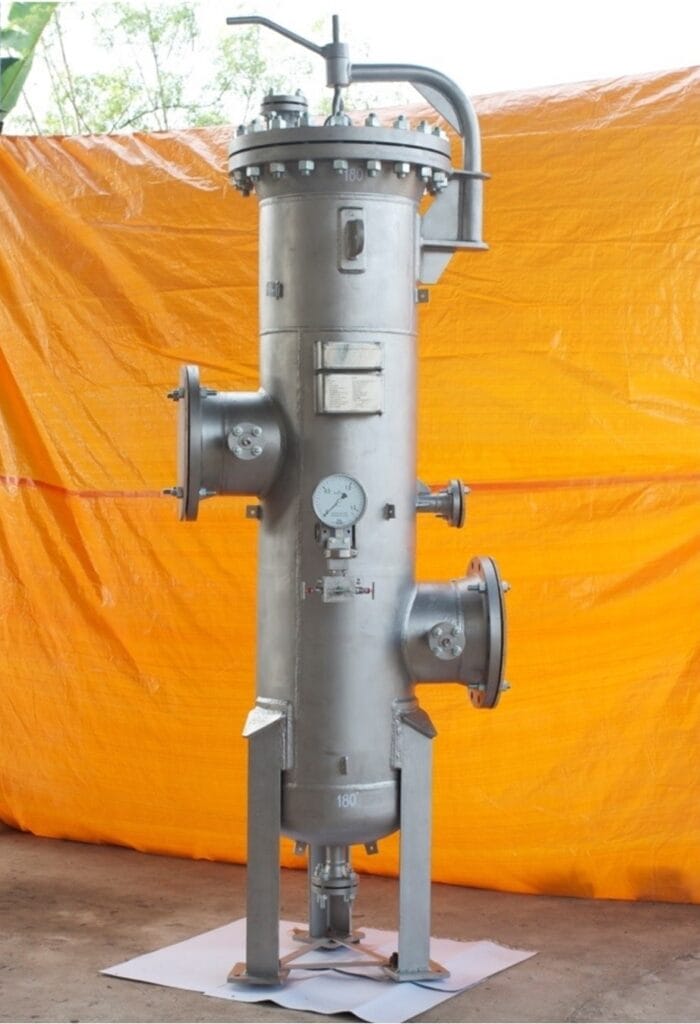
Dry gas filters are filtration systems specifically designed to remove solid contaminants from gas streams without handling liquids.
These systems typically contain:
- Filter housings
- Multiple filter cartridges
- Differential pressure indicators
- Drain systems for any accidental liquid carryover
Dry gas filters are commonly used in natural gas transmission systems, gas processing plants, and industrial fuel gas systems.
When combined with a high-quality natural gas filter cartridge, these filters provide efficient particle removal and reliable gas quality control.
Types of Natural Gas Filter Cartridges
Different filtration applications require different cartridge designs. The most commonly used types include:
Pleated Filter Cartridges: These cartridges feature folded filter media to increase surface area. The larger surface area improves particle holding capacity and reduces pressure drop.
Depth Filter Cartridges: Depth filters use thick filtration media to capture particles throughout the entire depth of the filter rather than just on the surface.
High-Efficiency Microglass Cartridges: These cartridges use microglass fibers to capture extremely fine particles and are often used in high-performance gas filtration systems.
Applications of Natural Gas Filter Cartridges
Natural gas filtration is required in several industrial systems.
Gas Turbine Fuel Systems: Turbines require extremely clean fuel gas to prevent damage to blades and combustion systems
Compressor Stations: Compressors must be protected from particulate contamination that could cause mechanical wear
Gas Processing Plants: Filtration ensures clean gas before it moves into downstream processing equipment
Industrial Burners: Clean gas improves combustion efficiency and reduces emissions.
Key Benefits of Natural Gas Filter Cartridges
Using high-quality filter cartridges offers several operational advantages. We have listed a few here:
- Improved equipment protection
- Removing particles prevents erosion and mechanical damage.
- Higher operational efficiency
- Clean gas improves combustion performance and system reliability.
- Reduced maintenance
- Proper filtration reduces the need for frequent equipment servicing.
- Longer equipment lifespan
- Turbines, compressors, and valves operate more reliably when contaminants are removed.
How to Choose the Right Natural Gas Filter Cartridge
Selecting the correct cartridge requires evaluating several technical parameters.
Filtration Efficiency: The cartridge must remove particles of the required size, often measured in microns.
Gas Flow Rate: The cartridge must handle the system’s flow capacity without excessive pressure drop.
Pressure Rating: The cartridge must withstand the operating pressure of the system.
Material Compatibility: Filter media and structural materials must be compatible with the gas composition and operating temperature.
Consulting experienced filtration system suppliers such as Sungov Engineering ensures the right cartridge design for specific applications.
Maintenance and Replacement
Filter cartridges do not last indefinitely. Over time, trapped particles accumulate within the media, increasing resistance to gas flow. To maintain system performance, cartridges must be replaced when:
- Differential pressure exceeds recommended limits
- Filtration efficiency declines
- Scheduled maintenance intervals are reached
- Regular monitoring of pressure drop across the filter vessel helps determine the right time for replacement.
Frequently Asked Questions
Q 1. What does a natural gas filter cartridge do?
A natural gas filter cartridge removes solid contaminants such as dust, rust, and debris from natural gas streams before the gas reaches sensitive equipment.
Q 2. How do dry gas filters work?
Dry gas filters use filter cartridges to trap solid particles from gas streams without handling liquids.
Q 3. Why is filtration important in natural gas systems?
Filtration protects turbines, compressors, and valves from particle damage while improving system efficiency.
Q 4. How often should a natural gas filter cartridge be replaced?
Replacement depends on operating conditions, gas contamination levels, and pressure drop across the filter.
Q 5. Where are natural gas filter cartridges used?
They are used in gas processing plants, compressor stations, fuel gas systems, and industrial combustion equipment.