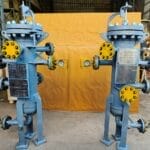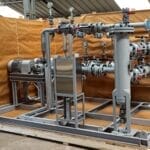

In industrial fluid handling systems, filtration is not an option but an essential part. Whether you are dealing with water, oil, chemicals, or fuel, removing contaminants protects equipment, improves efficiency, and reduces maintenance costs. Among the most used filtration devices are basket filters, specifically the simplex basket filter and the duplex basket filter strainer.
Both serve the same purpose, that is, removing debris from liquid streams. However, their design and functionality differ significantly. Choosing the right one depends on your operational needs, maintenance strategy, and system criticality.
In this blog, you will learn the differences between simplex and duplex basket filters in a clear, practical way. This will help you make an informed decision.
What Is a Basket Filter?
A basket filter is a type of filtration device that uses a perforated or mesh-lined basket to capture particles from a fluid stream. The basket is housed inside a pressure vessel, and as fluid flows through it, contaminants are trapped while clean fluid passes through.
Basket filters are widely used in:
- Water treatment systems
- Oil and gas applications
- Chemical processing plants
- Food and beverage industries
- Power generation facilities
What Is a Simplex Basket Filter?
A simplex basket filter is the most basic type of basket filter. It consists of a single filter housing with one basket inside.
How it works
Fluid enters the filter housing and passes through the basket, which traps particles. Over time, the basket accumulates debris and must be cleaned or replaced.
To perform maintenance, the system must be shut down, the pressure released, and the basket removed for cleaning.
Key characteristics
- Single housing design
- One filtration chamber
- Requires system shutdown for maintenance
- Simple construction
What Is a Duplex Basket Filter Strainer?

A duplex basket filter strainer consists of two separate filter housings connected by a valve arrangement. This design allows one basket to operate while the other is cleaned.
How it works
Fluid flows through one basket while the second remains on standby. When the active basket becomes clogged, the flow is switched to the standby unit without interrupting the system.
The clogged basket can then be cleaned while the system continues to operate.
Key characteristics
- Dual housing design
- Continuous filtration capability
- No need for system shutdown
- Includes changeover valves
Simplex vs Duplex Basket Filter: Core Differences
Understanding the differences between these two systems helps in selecting the right solution.
1. Number of Filter Chambers
- A simplex basket filter has only one chamber
- A duplex basket filter strainer has two chambers
2. System Downtime
- Simplex filters require a shutdown for cleaning
- Duplex filters allow cleaning without stopping the system
3. Operational Continuity
A duplex system ensures uninterrupted flow, making it suitable for:
- Critical industrial processes
- Power plants
- Fuel supply systems
4. Initial Cost
- Simplex basket filters are more cost-effective
- Duplex basket filter strainers have higher initial costs due to additional components
5. Maintenance Approach
Simplex filters require:
- System shutdown
- Pressure release
- Manual cleaning
Duplex filters allow:
- Online maintenance
- Continuous operation
- Faster servicing
6. Complexity
- Simplex filters have a straightforward design
- Duplex filters involve valves, piping, and switching mechanisms
When Should You Use a Simplex Basket Filter?
A simplex basket filter is a practical choice in situations where:
- Downtime is acceptable
- Budget constraints exist
- Filtration is not critical to continuous operation
- Maintenance intervals are infrequent
Typical applications include:
- Small-scale water systems
- Batch processing units
- Auxiliary systems in industrial plants
When Should You Use a Duplex Basket Filter Strainer?
A duplex basket filter strainer is ideal for applications where:
- Continuous operation is required
- System shutdown is costly or unsafe
- High flow rates demand uninterrupted filtration
- Maintenance must be performed without disrupting operations
Common applications include:
- Power generation plants
- Oil and gas processing
- Marine systems
- Fuel transfer systems
- Chemical manufacturing
Advantages of Simplex Basket Filters
Despite their limitations, simplex filters offer several benefits:
- Lower initial cost
- Simple design and operation
- Easy installation
- Suitable for low-risk applications
Advantages of Duplex Basket Filter Strainers
Duplex systems provide several operational advantages:
- Continuous filtration without interruption
- Reduced downtime
- Increased system reliability
- Improved maintenance efficiency
Factors to Consider When Choosing Between Simplex and Duplex

Selecting the right filter depends on your system requirements.
1. Process Criticality: If your system cannot afford downtime, a duplex filter is essential.
2. Maintenance Frequency: Frequent cleaning requirements favor duplex systems.
3. Budget: Simplex filters are more affordable upfront, but duplex systems may reduce operational costs over time.
4. Flow Requirements: High-flow systems benefit from uninterrupted filtration.
5. Safety Considerations: In hazardous environments, continuous operation without shutdown is often necessary.
Maintenance Tips for Basket Filters
Regardless of the type, proper maintenance is essential for performance.
- Monitor pressure drop across the filter
- Clean baskets regularly
- Inspect for wear or corrosion
- Replace damaged mesh or perforated baskets
- Ensure proper sealing during reinstallation
Frequently Asked Questions
Q 1. What is the difference between a simplex basket filter and a duplex basket filter strainer?
A simplex filter has one basket and requires system shutdown for cleaning, while a duplex filter has two baskets and allows continuous operation during maintenance.
Q 2. When should I use a simplex basket filter?
It is suitable for systems where downtime is acceptable, and filtration is not critical to continuous operation.
Q 3. Why choose a duplex basket filter strainer?
It allows uninterrupted filtration, making it ideal for critical systems that cannot afford shutdowns.
Q 4. Are duplex filters more expensive?
Yes, they have a higher initial cost but often provide better long-term value by reducing downtime.
Q 5. Which is better for industrial applications?
For critical and continuous operations, duplex filters are generally the better choice.